ROUNDHOUSE 84322 Baltimore Drovers Caboose Livestock Cattle Scale Ho
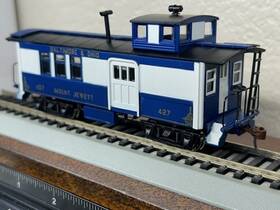
( Brand: Roundhouse ), ( Manufacturer Part Number: 84322 ), ( Country Of Origin: China ), ( Assembly Status: Ready To Go/pre-built ), ( Color: Multicolor ), ( Replica Of: Drovers Caboose ), ( Material: Plastic ), ( Year Manufactured: 2007 ), ( Grade: C-10 Mint-brand New ), ( Control System: Dc / Dcc ), ( Age Level: 17 Years Up ), ( Gauge: Ho ), ( Vintage: No ), ( Type: Freight Car ), ( Rail System: Two-rail System ), ( Corporate Roadname: Baltimore Ohio ), ( Theme: Railroading ), ( Features: Limited Edition, Painted, Metal Wheels, Knuckle Couplers )
Review ROUNDHOUSE Baltimore And Ohio Drovers Caboose Livestock Cattle Ho Scale New Rare
Introducing the Roundhouse 84322 Baltimore Drovers Caboose model in HO scale, a must-have addition to any livestock or cattle train collection. This intricately detailed caboose replicates the distinctive design of the Baltimore and Ohio Railroad (B&O) drovers' cabooses, which were specifically designed to transport livestock.
Measuring just over 13 inches long, this caboose boasts an authentic exterior featuring traditional B&O colors and intricate lettering. The roof is adorned with a unique combination of red and black shingles, while the sides and ends showcase wooden plank detailing and metal accents. The caboose comes equipped with authentic couplers and a working drawbar, enabling seamless integration into your HO scale railway.
Step inside the caboose, and you'll find a meticulously crafted interior that accurately reflects the living quarters of a 19th-century railroad drover. The interior includes a coal stove, bunk beds, and a dining table. Detailed wood grain textures and authentic materials such as felt, rubber, and metal add to the overall authenticity of the model.
The Roundhouse 84322 Baltimore Drovers Caboose is designed to accommodate livestock, and the model includes removable stock pens on both ends. The pens feature metal bars and are held in place by adjustable straps, allowing for easy access and removal. The caboose also includes a water tank and hose for livestock watering, adding to the functionality and realism of the model.
This HO scale caboose from Roundhouse is built to last, with high-quality materials and meticulous attention to detail. Whether you're a seasoned model railroad hobbyist or just starting your collection, the Roundhouse 84322 Baltimore Drovers Caboose is sure to impress with its authentic design, intricate detailing, and functional features. Add this unique and historically accurate model to your livestock or cattle train collection today.
The Roundhouse 84322 Baltimore & Ohio Railroad (B&O) Drovers Caboose in HO scale is a popular model among railroad hobbyists and modelers who focus on livestock transport. This caboose is an excellent addition to any HO scale model railroad layout representing the B&O or similar railroads during the era of livestock transportation. In this analysis, we will discuss the pros and cons of buying this model to help you make an informed decision.
Pros:1. Authentic Detailing: This model features intricate detailing, accurately representing the B&O Drovers Caboose. The exterior boasts wooden planking with weathering effects, metal stirrup steps, and realistic couplers. The interior includes detailed wall paneling, benches, and a drop-down table.
2. Scale Proportions: The Roundhouse 84322 model maintains accurate scale proportions, ensuring a harmonious look when integrated into a layout with other HO scale models.
3. Durable Construction: Made from high-quality materials, this caboose is built to last and can withstand the rigors of frequent handling and transportation.
4. Operational Capabilities: The model is designed to operate on HO scale tracks, giving you the opportunity to add realistic functionality to your layout.
5. Historical Significance: As a representation of a critical component of livestock transportation history, this model adds historical value to your collection.
Cons:1. Price: Compared to other HO scale models, the Roundhouse 84322 B&O Drovers Caboose may be priced higher due to its intricate detailing and high-quality construction.
2. Limited Availability: Due to its popularity, this model may be difficult to find in stock at local hobby shops or online retailers, requiring additional effort in sourcing.
3. Assembly Required: Some hobbyists may find the assembly process time-consuming, as the model may require gluing or attaching various parts before it is fully operational.
Conclusion:The Roundhouse 84322 B&O Drovers Caboose in HO scale is an excellent investment for any railroad enthusiast or modeler, offering authentic detailing, historical significance, and operational capabilities. While it may come with a higher price tag and require additional effort for assembly, the overall value and enjoyment it brings to your collection make it a worthwhile purchase.
Recommendation:If you're looking to add a livestock transport caboose to your HO scale layout representing the B&O or a similar railroad during the era, the Roundhouse 84322 model is an excellent choice. Its intricate detailing, accurate scale proportions, and operational capabilities make it a valuable addition to any collection. While the price and assembly requirements may be drawbacks for some, the historical significance and overall enjoyment it provides make it a worthwhile investment.
Details:
Standard Draft gear box. The refrigerator car radically altered the meat business. Competing firms such as Armour and Company quickly followed suit. Minneapolis' Henry C.
The ultimate solution to these problems was devise a method ship dressed meats from regional packing plants the East Coast markets in form of refrigerated boxcar. Rail cars have been used to transport livestock since the 1830s. Many of these unique items are from my personal inventory which was accumulated over the years. In railroad terminology, a stock car or cattle is type of rolling used for carrying livestock not carcasses to market.
These cabooses appeared usually in stock trains where the entire train was made up of livestock cars. Most railroads resisted the call for as long possible from shippers improvements to cars specifically designed carry livestock. RED GREEN lamp on top. They are hard to part with but due downsizing in retirement they tare looking for a good home which can appreciate and enjoy them.
During this period, the cars' capacities also increased. The item is NEW in the original box from old stock. Some of the early railroad companies attempted to alleviate problems by adding passenger cars trains that hauled stock. In 1906 Congress passed a law that required the feeding and watering of livestock on trains every 28 hours.
The drovers cabooses were always kept on the rear of train since cars primary purpose was still to serve as quarters for conductor and brakemen only secondarily drovers. Improved technology and faster shipping times have greatly reduced deaths. RALISTIC Satin paint finish. Most of these items are New in the box removed only to take photos them.
The Burton Stock Car Company's design provided sufficient space so as to allow the animals lie down in transit on a bed of straw. Magnetically operated, body mounted couplers. The rear section was the standard railroad crew portion with cooking and sleeping accommodations as well cupola or bay window. Underbid Detail.
Refrigerated cars. Railroads turned to a modified caboose, called drovers car or which was about twice the length of standard caboose and provided features for train crew, but also accommodations ranch hands benches that folded into beds, stove, washroom. The front section was reserved for the livestock drovers. Claims were made that the meat of neglected animals was unfit for human consumption.
Ready to Run. Specialized types of stock cars have been built to haul live fish and shellfish circus animals such as camels elephants. DISCONTINUED by the Manufacturer. Needle Point axles.
It was where the stock men rode and took care of animals during trip at rest stops. Featuring the MOUNT JEWETT Logo and paint scheme. Even after the humane advances cited above were put into common practice, many animals weakened by long drive died in transit, further increasing per-unit shipping cost. However, even with livestock handlers and faster schedules, many stock cars were still listed on company rosters open roofs very little in the way of improved conditions for themselves.
Initial use and development. Lettered for. Getting food animals to market required herds be driven hundreds of miles rail heads in the Midwest, where they were loaded into stock cars and transported eastward regional processing centers. THIS IS AN ASSEMBLED Item.
Detroit's William Davis patented a refrigerator car that employed metal racks to suspend the carcasses above frozen mixture of ice and salt. These cabooses had two separate sections. Until the 1880s, when Mather Stock Car Company and others introduced more humane stock cars, death rates could be quite high as animals were hauled over long distances. Driving cattle across the plains led to tremendous weight loss, and a number of animals were typically lost along way.
Roof Walkways. Certain costly inefficiencies were inherent in the process of transporting live animals by rail, particularly because some sixty percent animals mass is composed inedible matter. The first patented stock car designs that actually saw use on American railroads were created by Sudoku Street. Trucks with Finely Molded side frames.
Crisp, Detailed, realistic lettering. Out - Of Production. A certain percentage of animal deaths on the way to market was even considered normal 6% for cattle and 9% sheep average, according a congressional inquiry, carcasses dead animals were often disposed along tracks be devoured by scavengers, though some sold glue factories or unscrupulous butchers. Particular attention must be given to stock unaccompanied by attendants.
part #: 84322 price
- $99.95
specifications mthoscaletraingi:
- brand: Roundhouse
- mpn: 84322
- country of origin: China
- assembly status: Ready To Go/pre-built
- color: Multicolor
- replica of: Drovers Caboose
- material: Plastic
- year manufactured: 2007
- grade: C-10 Mint-brand New
- control system: Dc / Dcc
- age level: 17 Years Up
- gauge: Ho
- vintage: No
- type: Freight Car
- rail system: Two-rail System
- corporate roadname: Baltimore Ohio
- theme: Railroading
- features: Limited Edition, Painted, Metal Wheels, Knuckle Couplers
shipping mthoscaletraingi:
- cost: $11.00
- type: Calculated
- transit: 6-10 Days
- class: Standard, Expedited
- carrier: USPS
- service: USPS Ground Advantage, USPS Priority Mail
seller mthoscaletraingi:
- # reviews: 15963
- rating: 100.0%
- city: Van, Texas
payments mthoscaletraingi:
- wallet: Apple-pay
- credit card: Mastercard
- other
returns mthoscaletraingi:
- paid by: Seller
- policy: Returns Accepted
- method: Money back
- time: 30 Days
offer mthoscaletraingi:
- availability: In Stock
- quantity: 1
- sold: 0
- started: December 20, 2025
- options: Ship-to-home
general mthoscaletraingi:
- condition: New
- model Railroads Trains > Railroads Trains > Freight Cars
Roundhouse 84322 Is Similar To:
- Athearn Roundhouse Ho 50foot Acf Box Car Chicago And North Western Cnw 155193 1262 (34.7% similar) Roundhouse item number 1262. New item in box. Wheels with RP25 contours operate on code 70, 75, 83, 100 rail. Minimum radius: 18INCH. Fully-assembled and ready to run out of the box. 70-TON roller bearing trucks with 33INCH wheels. The Roundhouse RND1262 is in new condition...(June 4th, 2022)
- Roundhouse Ho Scale Hooker Chemicals Shorty Tank Car Vintage New In Box (29.8% similar) It has not yet been put together, and the parts are still in their sealed plastic bags. The car number is 24990. The Roundhouse 3302 is in new condition...(June 20th, 2022)
- Ho Scale Roundhouse 12504 50foot Plug Door Box Car Hershey Foods Rare New Kit (39.5% similar) Item # 12504 Roundhouse 50FOOT plug door box car Hershey foods kit-new. DC Roundhouse made in the USA !! boxes could have prices, RN # or other. This is rare kit. This is what this hobby was about ! the Roundhouse 12504 is in new condition...(July 7th, 2022)
- Roundhouse Ho Bay Window Caboose Frisco 1728 (47.4% similar) Barber-bartender swing motion caboose truck per prototype. A popular type of caboose in later years was th-window caboose. Th window projected beyond the side of the car. The extension allowed the crew to inspect the side of the train. The Roundhouse 90265 is in new condition...(July 29th, 2022)
- 3 Roundhouse 7871 Gn Great Northern Offset Side Ballast Hopper Ho Scale Kit (37.6% similar) 3 Roundhouse 7870 saps 40FOOT Ara box car ho scale kit. The Roundhouse 7871 is in new condition...(August 3rd, 2022)
- New Soo Line Ho 40 Ft Aar Boxcar Kit By Roundhouse Bev-bel Custom Painted (29.3% similar) Car number is 44692. The kit includes the original trucks, doors, weights, couplers, roof walk, brake wheel, etc...(October 31st, 2022)
- Roundhouse 84276 Ho 84367 Wood Caboose C nw 12344 (44.6% similar) The caboose is made of plastic and has a scale 1:87. The caboose is a replica of the c NW 12344 and features multicolor paint scheme. This Roundhouse ho 84367 wood caboose is a great addition to any model railroad or train collection...(December 5th, 2023)
- Roundhouse 1532 4 Ho 3-bay Hopper Seaboard Qty 4 Cars New Kits-14 (32.3% similar) Rn# 160785 qty four 4 new kits lot # 14 these vintage represent decades of rail service from coal when to ballast, gravel, sand or wood chip later in years, item 1532 40' 3-BAY hoppers seaboard 4 inbuilt great late system paint scheme...(December 10th, 2023)
- Roundhouse Dl2-1-98 Ho Craftsman Built Bessemer And Lake Erie 40ft Boxcar Upgraded Boxed (37.1% similar) The trucks are fully sprung. Please see my other listings for more of these cars.shipping anywhere in the us is $6.50. A very handsome car in wonderful condition and its original box...(February 11th, 2024)
- Roundhouse B59-229 Nickle Plate 50 Ft Plug Door Car 1 87 H0 Scale Kit 4 Layout (35.5% similar) So that means it has been handled opened etc. Nickle plate 50 ft. Or when your done thanks mike. This is beyond my control. Plug door door car 1/87 h0 scale Roundhouse kit car 2ND ships for 1 buck more...(May 10th, 2024)
- Roundhouse 1046 Ho Scale Kit Pc Penn Central 40ft Box Car 104478 (32.3% similar) Doug - model train market. Instructions: original paperwork included. 100% satisfaction guarantee. Material: plastic. Paint: factory painted. Cosmetic condition: C-7 excellent. Packaging: original box. Trucks wheels: plastic / wheels. Build date: n/a. Couplers: hook horn. Growing up, my grandfather ...(July 30th, 2024)