WALTHERS 932-3926 Milwaukee Road Flexi Van Tofc Flat Car Ho Scale Trailers Rtr
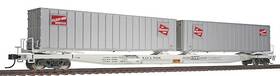
( Brand: Walthers ), ( Manufacturer Part Number: 932-3926 ), ( Assembly Status: Ready To Go/pre-built ), ( Color: Multicolor ), ( Replica Of: Flexi-van Tofc Car ), ( Material: Plastic ), ( Scale: 1 ), ( Grade: C-9 Factory New-brand New ), ( Year Manufactured: 2006 ), ( Control System: Dc / Dcc ), ( Franchise: Trailer Hauler Tofc ), ( Gauge: Ho ), ( Vintage: Yes ), ( Type: Freight Car ), ( Rail System: Two-rail System ), ( Corporate Roadname: Milwaukee Road ), ( Theme: Railroading ), ( Features: Highly Detailed, 2 Trailers, Gold Line Series ), ( Country/region Of Manufacture: China )
Review WALTHERS Milwaukee Road Flexi van Mark Tofc Flat Car Trailers Ho Scale New Rtr
The Walthers 932-3926 Milwaukee Road Flexi-Van TOFC (Trailer On Flat Car) Flat Car Trailers in HO Scale is an intricately detailed and authentic model for railroad enthusiasts and model train collectors. This RTR (Ready-to-Run) offering from Walthers Corp. delivers the look and feel of real-life Milwaukee Road freight trains.
The Flexi-Van TOFC flat car trailers are designed to accurately replicate the Milwaukee Road's distinctive gray and orange paint scheme. Each trailer features separately applied metal grab irons, stainless steel end panels, and photo-etched metal brake platforms. The trailers can be easily loaded and unloaded with the included wooden plank and metal turnbuckle loading ramps.
The flat car portion of this model is meticulously crafted, with authentic Milwaukee Road lettering and numbering on the sides and ends. The underframe is detailed with separately applied piping and couplers, while the truck sideframes and draft gear are accurately represented. The wheels and wheel bearings are also authentically detailed, making for smooth and realistic operation.
The Walthers 932-3926 Milwaukee Road Flexi-Van TOFC Flat Car Trailers in HO Scale come with Kadee-compatible couplers, ensuring easy connection to other HO Scale trains. The trailers can be operated with conventional DC or DCC systems, adding flexibility for model railroaders.
This HO Scale model measures approximately 36 inches long when assembled, making it a perfect addition to any HO Scale layout representing the Midwestern United States during the postwar era. The Walthers 932-3926 Milwaukee Road Flexi-Van TOFC Flat Car Trailers are a must-have for any serious model railroader or collector, offering a high level of detail, accuracy, and authenticity.
Walthers 932-3926 Milwaukee Road Flexi-Van TOFC Flat Car Trailers (HO Scale RTR) - Pros, Cons, and Recommendation
Introduction:The Walthers 932-3926 Milwaukee Road Flexi-Van TOFC Flat Car Trailers in HO scale is a popular RTR (Ready-to-Run) model for model railroaders. This trailer is an excellent addition for those modelers who are into freight trains and want to add some variety and realism to their layout. In this article, we will discuss the pros, cons, and provide a recommendation based on the features and quality of this HO scale RTR model.
Pros:1. Detailed and Accurate: This model is highly detailed and accurately represents the Milwaukee Road Flexi-Van TOFC Flat Car Trailers. The body panels, doors, and other features are all molded with precision, giving a realistic look.
2. Easy Assembly: The Walthers 932-3926 comes as a Ready-to-Run model, meaning that there is minimal assembly required. The wheels and couplers are already installed, making it an ideal model for beginners.
3. Functional Features: The trailers come with functional sliding doors, which can be operated manually. This feature adds to the realism of the model and allows for easy loading and unloading of freight.
4. Variety: These trailers were used by various railroads, including Milwaukee Road, Soo Line, and others. Walthers offers a variety of paint schemes, allowing modelers to choose the one that best fits their layout.
Cons:1. Coupler Type: The trailers come with Kadee-compatible couplers, which may not be compatible with all model railroad layouts. Modelers may need to invest in additional couplers to connect the trailers to their trains.
2. Price: Compared to some other HO scale RTR models, the Walthers 932-3926 can be considered expensive. However, the level of detail and functionality may justify the price for some modelers.
3. Weight: The trailers are relatively heavy due to their metal construction, which may require additional support for modelers with lighter layouts.
Conclusion:The Walthers 932-3926 Milwaukee Road Flexi-Van TOFC Flat Car Trailers (HO Scale RTR) is an excellent model for those who want to add realistic and detailed freight cars to their layout. Its functional sliding doors, accurate detailing, and ease of assembly make it an ideal choice for both beginner and experienced modelers. While it may have some cons, such as the price and coupler type, the pros outweigh the cons, making it a worthwhile investment for model railroaders.
Recommendation:If you're looking for a highly detailed and realistic HO scale freight car for your layout, the Walthers 932-3926 Milwaukee Road Flexi-Van TOFC Flat Car Trailers (HO Scale RTR) is an excellent choice. Its functional features, accurate detailing, and ease of assembly make it a worthwhile investment for any model railroad enthusiast. However, be sure to consider the cons, such as the price and coupler type, before making your purchase. Overall, we recommend this model to anyone looking to add some variety and realism to their freight train layout.
Details:
The bogie was then unlocked and the trailer slid aboard. Many of these unique items are from my personal inventory which was accumulated over the years. Specialized Flatcar flatcars are used to ship tractors, military vehicles, steel plate and beams. THIS IS AN ASSEMBLED Item.
In operation, the trailer was first aligned with turntable and backed into place. Trailer Retaining brackets. They are hard to part with but due downsizing in retirement they tare looking for a good home which can appreciate and enjoy them. Weighted for optimum performance.
These short wheelbase rigs had a retractable front wheel to simplify lining the truck and trailer with turntable, large push pole provided extra reach needed spin into place. Body-mounted operating scale knuckle couplets. When trailers ride on flatcars TOFC they are referred to as piggybacks. Trailer on flatcar, also known as TOFC or piggyback, is the practice of carrying semi-trailers railroad flatcars.
Cranes and forklifts are the most common way to load a flat. Flatcars are open to the elements they do not have sides or a roof like other rail cars. For that reason, the design didn change much over time. Flatcars consist of a flat, horizontal floor or deck that is mounted on pair trucks.
The use of flatcars to ship trailers took off following World War II; this was referred as the piggyback revolution. Simulated decking. Even so, the basic flatcar is still riding rails to this day, carrying equipment, machinery, oversized loads, pipe, steel beams and more. Hand Railings.
Ready to Run. Painted and printed for realistic decoration. Alignment pins on Trailer bracket. TOFC is distinct from containerization.
As you might expect, flatcars are flat. Roller bearing trucks. Bulkhead Flatcar flatcars are used to ship steel plate, pipe and wood products. The trailers themselves also need to meet certain minimum requirements be able moved via crane, which is the most cost and time-efficient way of loading unloading them onto train.
Simple pivoting turntables replaced the complex and expensive hydraulic units. Cargo like pipe or rails may be loaded and unloaded with a crane other mechanical device. Gold Line TM. Highly-detailed, injection-molded body.
Alternatively, trailers may be driven onto the flatcars via ramps by a terminal tractor. They also feature chain tie down devices that run along the channels on both sides of car to secure loads. Separately applied ladders, brake rigging, stirrups, and handbrake details. Log flatcars are equipped with reinforced permanent steel stakes to make it easier secure the load.
Other roads showed some interest in the system, including ATSF, CB Q, IC, MILW, WP and more. Milwaukee Road NIFX #7028 gray, red Logo. Once in position, a pin locked the trailer to turntable, which was turned loaded position using on-board hydraulics. Although successful, the system had its limits.
Today, there are several variants of flatcars, including spine cars, center beams and well cars. Road Number may vary. Lettered for. Railroads often use flatcars to haul materials and equipment maintain tracks, including ties, rail, track panels, work vehicles.
Bulkheads, which are sturdy, vertical walls at each end of the car, help prevent loads from shifting past ends car. The item is NEW in the original box from old stock. Besides the need for facilities to handle loading and unloading with road preferably highway access, trailer on flatcar operations impose certain height clearance requirements. However, height clearance requirements tend to be slightly lower than for rolling highway transportation where entire trucks are loaded onto rail vehicles.
Farm equipment, military equipment and heavy construction can be driven on off of flatcars. 36 machined metal wheels with RP25 contours. While both are examples of inter modal transport, trailer on flatcar is the loading entire trailers onto railroad cars, while in containerization, container detached from chassis for transport. Most of these items are New in the box removed only to take photos them.
Minimum radius: 22. Mark III Flexi-Van Flatcar w/Two Trailers. Plain Flatcar flatcars are used to ship things like steel plate, machinery and beams. Snow and ice caused turntable problems during winter months, the special bogies had to be available at any point where units were off-loaded.
2 - 40 foot Trailers.
part #: 9323926 prices
- $29.99-$99.95
specifications mthoscaletraingi:
- brand: Walthers
- mpn: 932-3926
- assembly status: Ready To Go/pre-built
- color: Multicolor
- replica of: Flexi-van Tofc Car
- material: Plastic
- scale: 1
- grade: C-9 Factory New-brand New
- year manufactured: 2006
- control system: Dc / Dcc
- franchise: Trailer Hauler Tofc
- gauge: Ho
- vintage: Yes
- type: Freight Car
- rail system: Two-rail System
- corporate roadname: Milwaukee Road
- theme: Railroading
- features: Highly Detailed, 2 Trailers, Gold Line Series
- country/region of manufacture: China
payments mthoscaletraingi:
- credit card: Diners-club
- wallet: Google-pay
- other
shipping mthoscaletraingi:
- type: Calculated
- service: USPS Ground Advantage, USPS Priority Mail
- transit: 5-11 Days
- class: Standard, Expedited
- cost: $13.20
- carrier: USPS
general mthoscaletraingi:
- model Railroads Trains > Railroads Trains > Freight Cars
- condition: New
offer mthoscaletraingi:
- started: February 14, 2025
- options: Ship-to-home
- sold: 0
- quantity: 1
- availability: In Stock
returns mthoscaletraingi:
- paid by: Seller
- time: 30 Days
- method: Money back
- policy: Returns Accepted
seller mthoscaletraingi:
- # reviews: 15530
- city: Van, Texas
- rating: 100.0%
Walthers 932-3926 Is Similar To:
- 931-1863 Walthers Ho Scale Norfolk Southern Ry Thrall Mill Gondola Car (27.2% similar) Original box. No missing or broken parts. The Walthers 931-1863 is in new condition...(December 31st, 2021)
- 932-34107 Walthers Ho Scale Center Beam Flat Car Hampton 616374000364 (29.8% similar) Item is probably discontinued. Cars equipped with horn hook couplets. The Walthers 932-34107 is in new condition...(January 4th, 2022)
- 920-105822 Walthers Trinity Hopper Car Adm Archer Proto Ho 616374165049 (31.8% similar) Condition is new. 67FOOT trinity 6351 4-BAY covered hopper - ready to run archer-Daniels-midland #63385 gray, leaf logo, yellow conspicuous stripes. Manufacturer: Walthers. The Walthers 920-105822 is in new condition...(January 15th, 2022)
- 920-100131 Walthers Ho Utlx Tank Car Clay 616374123193 (31.4% similar) Condition is 'new. 40FOOT TLC 16,000-GALLON funnel-flow tank car - ready to run kt Claus ammo #14020 white, red. The Walthers 920-100131 is in new condition...(January 26th, 2022)
- 109119 Walthersproto Walthers Gunderson Rblt Well Car Ttx Dttx 616374175239 (26.4% similar) TRX detox 59283 old logo. Part # 109119. Henderson rebuilt all-purpose 40FOOT well car. The prototypes were built from obsolete 48FOOT well cars by removing eight feet from the and the fifth-wheel hitch plates used for semi-trailers. The 109119 is in new condition...(February 9th, 2022)
- 920-109002 Walthers Proto Ho Gunderson Rebuilt Well Car Ttx Dttx (27% similar) Walthers Porto ho Henderson rebuilt all-purpose 53 well car TRX detox several numbers available. We combine shipping. The Walthers 920-109002 is in new condition...(February 20th, 2022)
- 9325636 Walthers Ho Scale Depressed Center Flat Car Trucks Ge New (25.6% similar) Ho scale Walthers 75FOOT depressed flat car, 4 trucks, ge, #2002 new vintage. Thanks, bob. The Walthers 9325636 is in new condition...(February 21st, 2022)
- 920-105239 Walthers Proto Chessie System Evans Cushion Coil Car 616374175413 (30.9% similar) Chess system. Walthers Porto. 50FOOT Evans cushion coil car. Based on cars in service 1970 S to early 2000 S. Detailed body with v-shaped load cradle and separate restraints. The Walthers 920-105239 is in new condition...(February 27th, 2022)
- 932-8101 Walthers Scale Thrall Unit Articulated Double Stack Car Set (19.2% similar) The box is rough but the set is new and great shape inside. The Walthers 932-8101 is in new condition...(May 14th, 2022)
- 910-8022 Walthers Ho Prr Flatcar With Open Auto Rack 616374173181 (36.6% similar) This is a Walthers 910-8022 ho Parr 89FOOT flatcar with bi-level open auto rack rtr #930020. Features: one time run of these road numbers, order now, limited quantity available. Prototypes in service 1968 to 1970 S, designed especially for carrying light trucks and similar large vehicles, new die...(May 19th, 2022)
- Walthers Ho Train Union Pacific Black Smith Car Kit 932-5584 Free Shipping (25.4% similar) Union pacific. 30 foot black smith car. Kit that requires assembly. New includes box. The Walthers 932-5584 is in new condition...(June 7th, 2022)